
news
Why HiL and PHiL are shaping the future of advanced power testing
As power systems become more complex, test environments must become more flexible, realistic and efficient.
That is why real-time simulation, Hardware-in-the-Loop (HiL) and Power-Hardware-in-the-Loop (PHiL) are becoming increasingly important for engineering teams working in power electronics, smart grids, batteries, renewables and e-mobility.
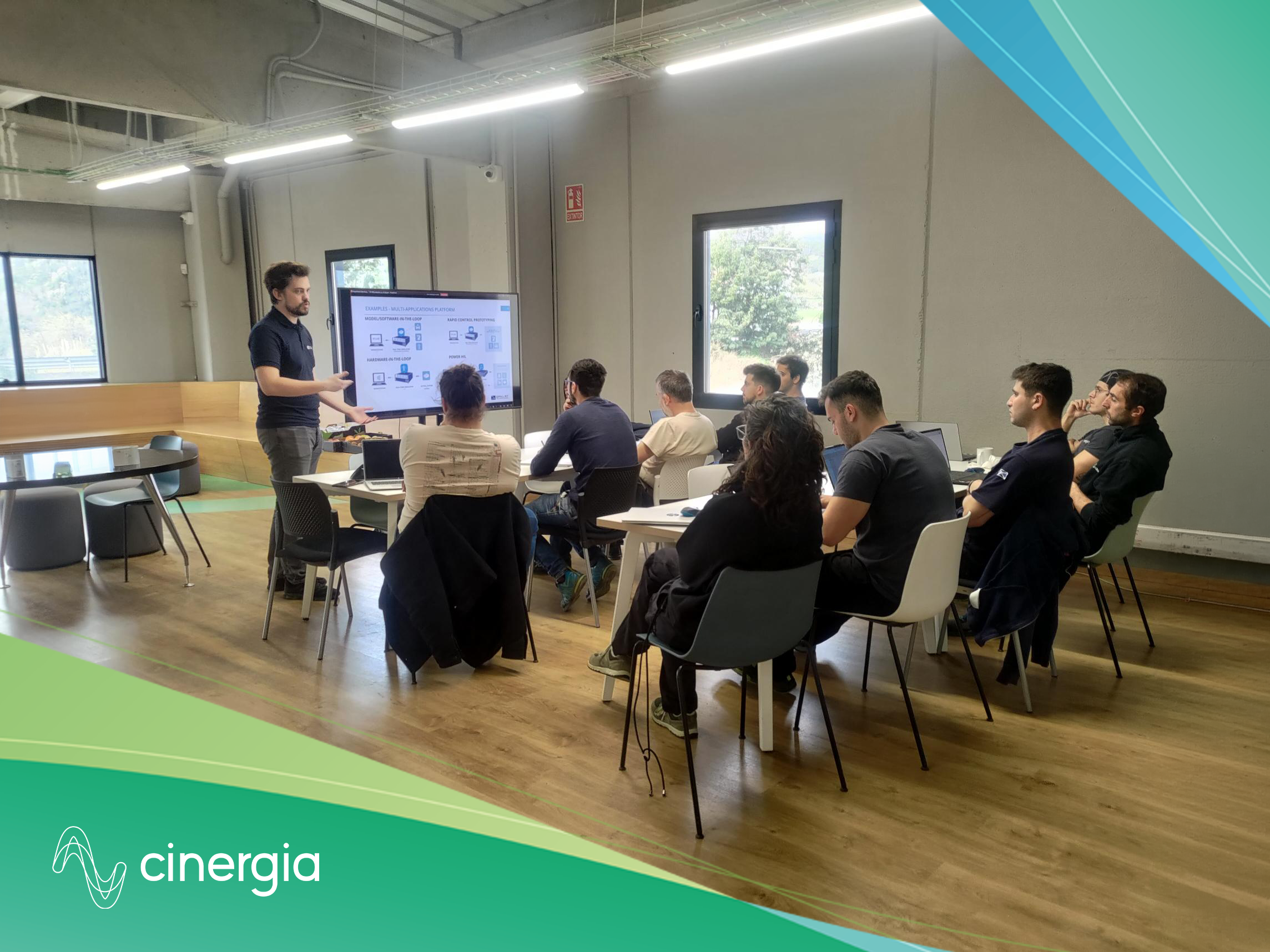
During a recent training session at Cinergia, OPAL-RT shared key insights into how HiL and PHiL help engineers validate advanced systems earlier, safer and under more realistic operating conditions
A closer look at HiL, PHiL and real-time simulation
The training session focused on the fundamentals of HiL and PHiL, as well as on the role of real-time simulation in advanced validation workflows.
In HiL, engineers connect real controllers or devices to a simulated system running in real time. This makes it possible to validate behaviour before full physical deployment, reducing risk and improving development efficiency.
PHiL takes this one step further by adding real power to the loop. Instead of testing only signal-level interaction, engineers can connect simulation to real power hardware and validate how systems behave under more realistic energy conditions.
 - copia.jpg)
Where Cinergia fits in PHiL environments
In PHiL setups, Cinergia acts as the link between the simulated world and the physical one.
While OPAL-RT manages the simulation environment, Cinergia converts simulated commands into real power signals for the hardware under test. This makes it possible to build more advanced and more flexible validation environments for demanding applications.
For companies working on grid-connected systems, batteries, converters or power electronics, this approach opens the door to safer and more configurable testing scenarios.
-kt3xdb.jpg)
Why this matters for advanced testing
As applications become more dynamic and interconnected, traditional testing alone is often no longer enough.
HiL and PHiL help engineering teams:
validate systems earlier in development
reduce testing risk
reproduce more complex operating scenarios
gain more flexibility in R&D and validation setups
This is especially relevant in applications such as smart grids, microgrids, battery testing, renewable energy, PV inverter testing and e-mobility.
From simulation to real-world applications
One of the practical examples shown during the session was a real-time microgrid model built in RT-LAB.
The setup combined simulated grid elements and real hardware, showing how complex scenarios can be tested with greater realism and control. This kind of environment is especially valuable for engineers working on grid dynamics, controller validation and advanced power electronics behaviour.
-n49k2j.jpg)
Cinergia solutions for advanced validation environments
Cinergia develops regenerative power solutions designed to support demanding test environments across R&D, industrial validation and automated benches.
For highly versatile applications, the All-Terrain AC/DC Regenerative Converter combines Grid Emulator, Electronic Load and DC Bidirectional functions in a single platform, making it ideal for renewable energy, ESS, PV inverter testing, Power-HIL, battery testing and e-mobility.
For compact, high-performance testing setups, the SiC 50 family offers a next-generation solution based on SiC technology, combining flexibility, efficiency and broad test coverage.
For automated or space-constrained labs, the SiC-RSe provides a compact 19-inch rack-mounted solution with Mixed Mode functionality, easy integration and strong performance for advanced validation scenarios.
Watch the full OPAL-RT training series on YouTube
We will be progressively publishing the full video series from this training session on our YouTube channel, covering topics such as real-time simulation, HiL fundamentals, PHiL environments, interface stability and RT-LAB microgrid models.
Watch the OPAL-RT training playlist on YouTube
Don’t miss the next videos. Subscribe to Cinergia’s YouTube channel and stay up to date with new content on advanced power testing, PHiL environments and real-world validation scenarios.
-uw9qt0.jpg)
Driving the future of advanced power testing
HiL, PHiL and real-time simulation are helping engineering teams build smarter, safer and more realistic validation environments.
At Cinergia, we continue working with technologies and partners that support the future of advanced power testing, Power-HiL, grid emulation, battery testing and power electronics validation.
Looking for the right solution for your testing environment? Contact our Sales team to discover how Cinergia can support your lab, bench or validation project.
More articles
news
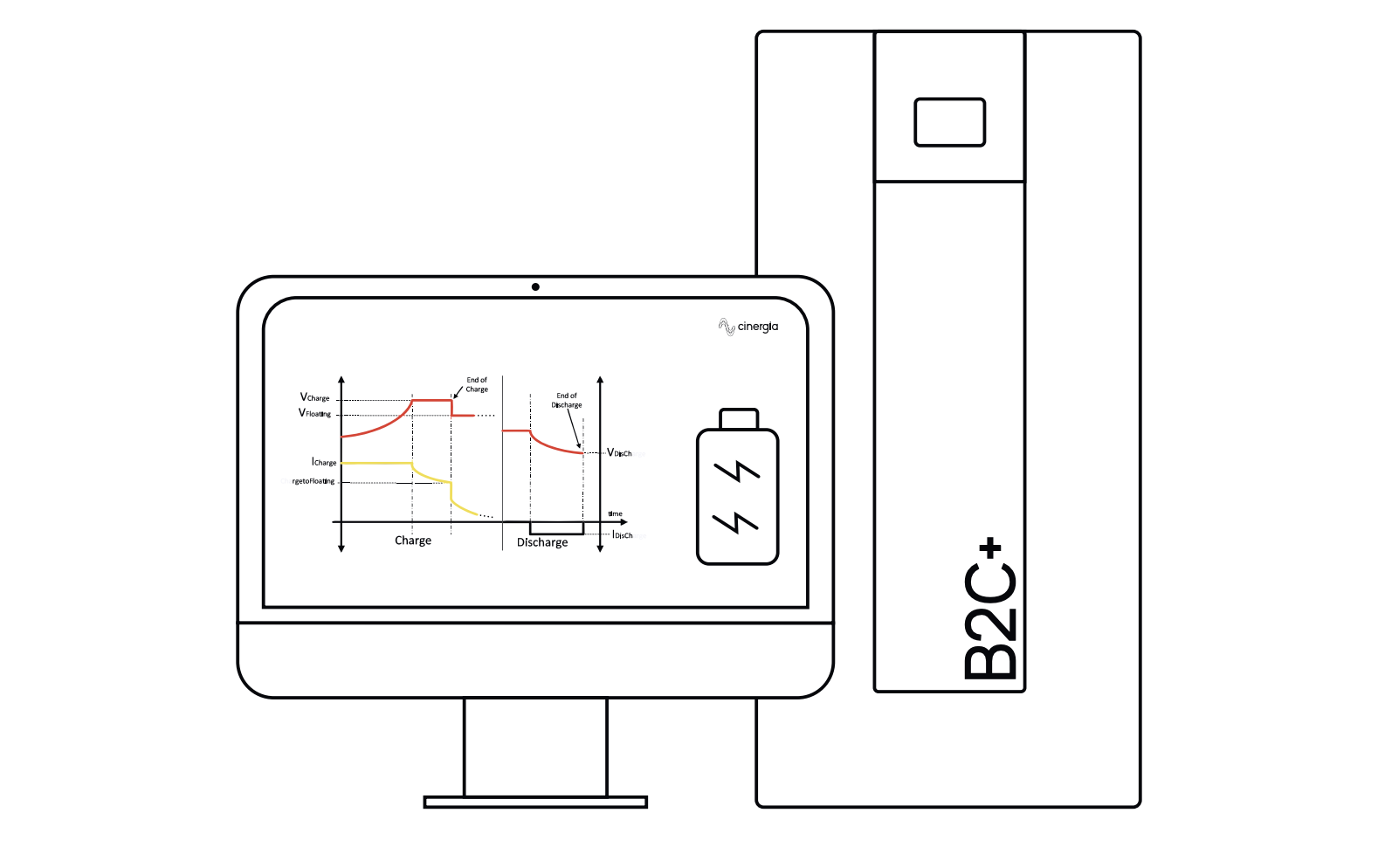
Evaluate the performance of a battery with our Battery Pack Tester
We have developed a module in battery testing to create a flexible and intuitive sequence of battery cycles
news
We will be at the Electronica virtual trade fair next week
This year, due to the pandemic situation, the fair has reinvented itself and has opted for the digital format
news
GE&EL ePLUS AC/DC: the most flexible and unique testing equipment
A product that gets-together the whole CINERGIA’s catalogue combining the functionalities of a Grid Simulator, an Electronic Load and a DC Bidirectional Converter
news
Cinergia shines at MWC 2025
Unveiling the SiC-RSe and Representing Catalan Innovation at the global stage of Mobile World Congress