
news
How energy efficiency improves competitiveness in advanced testing environments
Energy efficiency is no longer just a technical improvement or a sustainability objective. In today’s industrial landscape, it has become a real business lever.
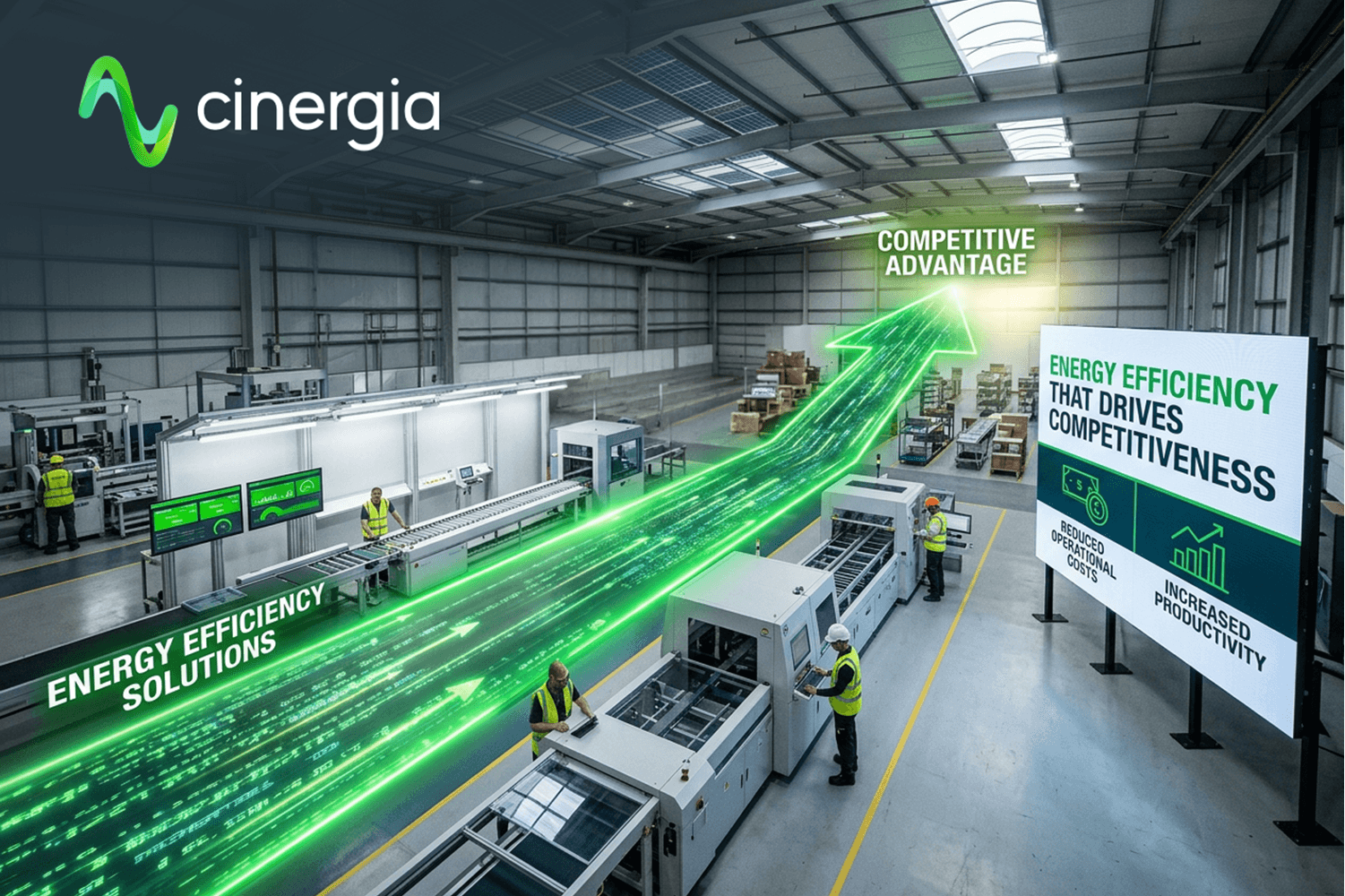
For organizations working in advanced testing and validation environments, energy use has a direct impact on operating costs, resource allocation, project profitability and, ultimately, competitiveness. The more demanding the test environment, the more relevant efficiency becomes.
In this context, reducing energy consumption is not simply about using less power. It is about building more profitable, scalable and efficient processes. And that is especially important in sectors where testing plays a critical role in development, validation and performance optimization.
Energy efficiency is no longer just a technical issue
For many years, energy efficiency was mainly associated with technical optimization: improving performance, reducing losses or meeting internal energy targets. Today, that perspective is no longer enough.
Across industrial and R&D environments, efficiency has become a strategic factor that influences how organizations manage budgets, plan investments and maintain competitiveness in increasingly demanding markets.
When energy consumption is not optimized, the impact goes beyond utility costs. It affects the overall efficiency of processes, the cost structure of projects and the long-term viability of testing activities. In contrast, better energy performance creates room for cost savings, better resource use and stronger business outcomes.
This is why energy efficiency should be understood not only as a technical metric, but as a real competitive advantage.
How energy use impacts advanced testing environments
In advanced testing environments, energy consumption can quickly become a major operational factor.
Laboratories, validation benches and development setups often require long test cycles, repeated procedures and high-performance equipment operating under demanding conditions. As testing grows in complexity, energy demand also increases.
This has direct implications for:
operating costs
process efficiency
project budgets
test scalability
overall profitability
The issue becomes even more relevant in sectors where testing is continuous, highly specialized or closely linked to product development timelines. In these contexts, inefficient energy use does not only increase costs but it can also limit agility, reduce flexibility and affect the competitiveness of the entire testing process.
That is why efficiency matters so much in advanced testing environments: because energy performance influences both technical execution and business performance.

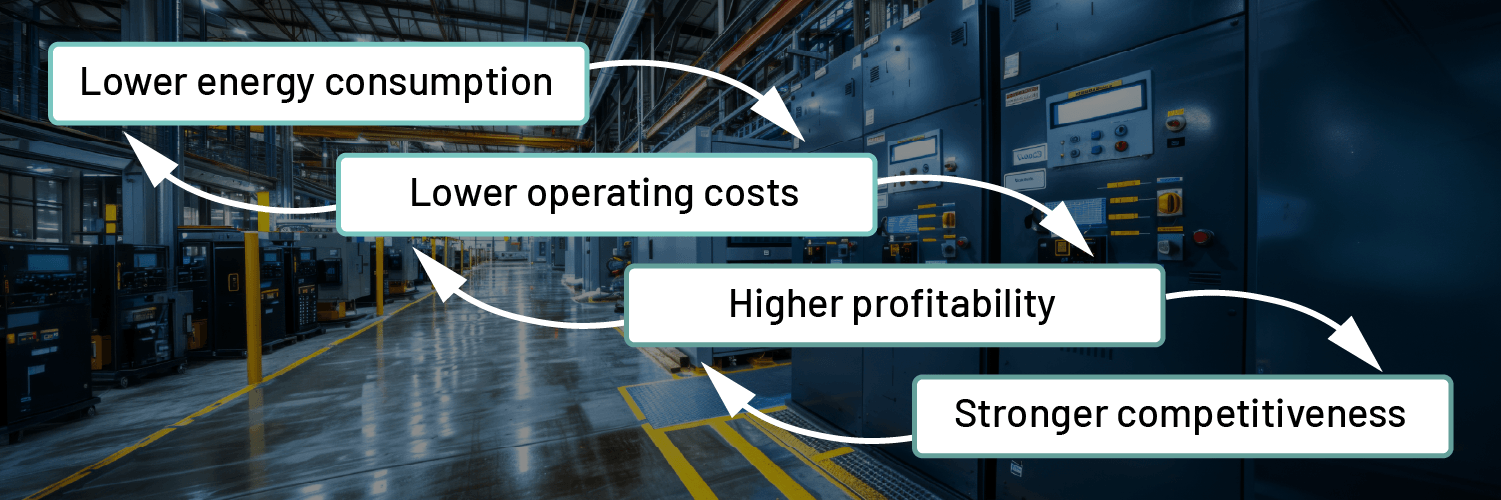
Lower consumption, higher profitability
Reducing energy consumption has a clear and measurable business impact.
When organizations improve the efficiency of their testing environments, they can lower operating costs, optimize energy use and reduce unnecessary losses across the process. This makes testing activities more sustainable not only from an environmental perspective, but also from an economic one.
In practice, this means that better energy efficiency helps create:
lower operating costs
better process performance
improved use of resources
higher project profitability
stronger competitiveness
This relationship becomes even more tangible when technical performance supports measurable efficiency gains. In advanced testing environments, features such as up to 92% efficiency, 30% electric consumption reduction and THDi < 3% are not just technical claims. They translate into lower energy demand, more stable operation and better overall economics.
This is especially important in projects where repeated testing, large power demand or multiple validation phases can significantly affect budgets and timelines. In these cases, improving efficiency is not just a technical upgrade , it becomes a way to make projects more viable and more competitive.
Energy efficiency, therefore, should be seen as a lever that supports both short-term savings and long-term profitability.
Why regenerative solutions make a difference
This is where regenerative power solutions play a particularly valuable role.
Unlike conventional systems that simply dissipate energy, regenerative solutions are designed to manage power more efficiently by feeding energy back instead of wasting it. This helps reduce losses, improve overall system efficiency and create more sustainable testing environments.
In advanced validation setups, this approach can make a significant difference. The more demanding the testing conditions, the more relevant it becomes to work with solutions that support efficiency, flexibility and performance at the same time.
For organizations focused on profitability and competitiveness, regenerative technology offers a practical way to align technical performance with business goals. It helps transform energy efficiency from a desirable feature into a real operational advantage.
At Cinergia, this principle is part of the foundation of our solutions. Our regenerative AC and DC power converters are designed to support demanding test environments with a more efficient use of energy, while maintaining the performance and precision required in advanced applications.
To explore how this approach applies across different sectors, you can discover Cinergia’s application areas or learn more about integrated solutions such as the Plug & Play Cabinet power testing solution.
Where energy efficiency creates the most value
The business impact of energy efficiency is especially clear in testing environments where power demand, performance requirements and validation complexity are high.
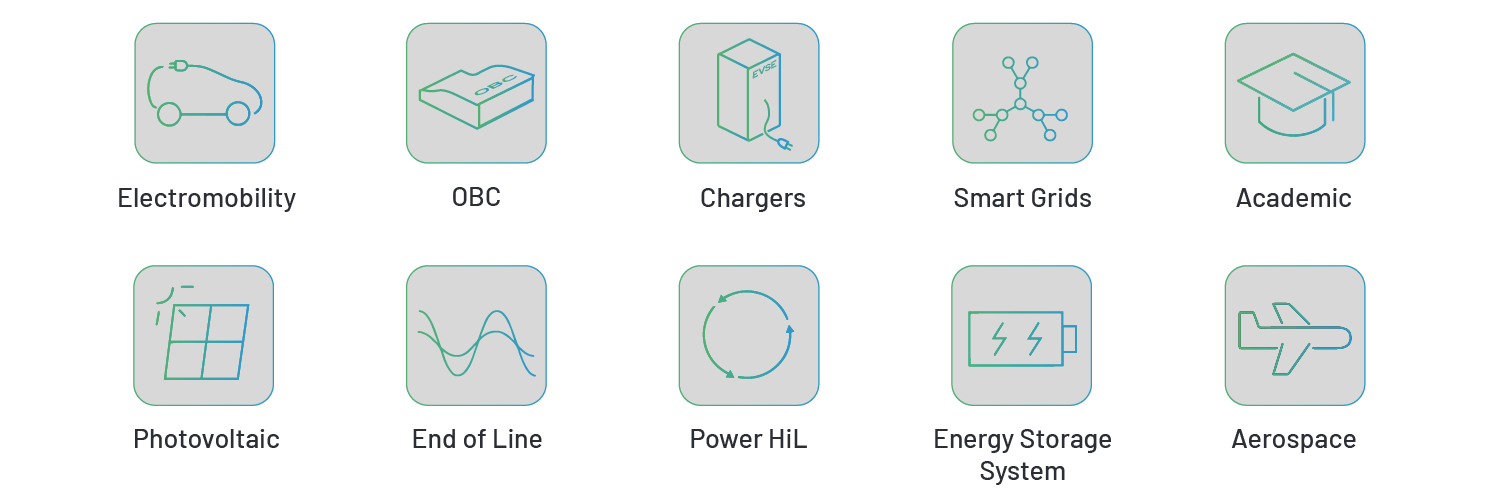
This is the case in application areas such as electromobility, OBC, chargers, smart grids, academic research, photovoltaic, end-of-line testing, Power HiL, energy storage systems and aerospace.
In these environments, efficiency is not an isolated benefit. It directly influences how effectively organizations can test, validate and scale their processes.
For example, in battery-related, e-mobility or charger applications, repeated validation cycles and demanding load conditions can make energy optimization highly relevant from a cost perspective. In photovoltaic or Power HiL environments, efficient power management helps improve both process performance and operational sustainability. In industrial and end-of-line test applications, efficient operation and smooth integration contribute to more agile and reliable setups.
This is why energy efficiency creates value across multiple sectors: because it helps organizations improve both technical performance and economic performance.
Efficiency, precision and competitiveness
Energy efficiency alone is not enough.
In advanced testing environments, organizations also need precision, reliability and technical performance. Reducing energy consumption only creates real value when the testing environment continues to deliver accurate, stable and repeatable results.
This is why efficiency should be understood as part of a broader equation. The most competitive testing environments are those that combine:
lower energy use
strong technical precision
process reliability
operational flexibility
When these factors come together, organizations are in a stronger position to optimize both their testing processes and their business performance.
This is also where claims such as THDi < 3%, up to 92% efficiency or 30% electric consumption reduction take on real meaning. They are not only indicators of technical quality , they are part of what allows organizations to achieve more stable, more efficient and more competitive testing environments.
At Cinergia, we see efficiency not as a compromise, but as an enabler, one that supports impact, savings and precision in demanding testing environments.
How Cinergia helps build more competitive testing environments
Cinergia develops regenerative AC and DC power converters designed for advanced testing and R&D applications where efficiency, flexibility and performance matter.
Our solutions help organizations create testing environments that are not only technically robust, but also better aligned with business needs such as cost control, resource optimization and operational efficiency.
This value becomes especially relevant in sectors such as:
electromobility
energy storage
renewable energy
smart grids
power electronics
industrial validation
Through our technology, customers can work with more efficient and more adaptable setups, helping reduce unnecessary energy losses while supporting demanding test requirements.
For organizations looking to improve the profitability and competitiveness of their validation environments, Cinergia solutions offer a way to connect technical efficiency with business value.
Whether the priority is versatility, compactness or next-generation performance, Cinergia offers solutions designed for demanding environments, including the All-Terrain AC/DC Regenerative Converter, our SiC technology family and the compact SiC-RSe.
From efficiency to savings
Better energy performance contributes to lower operating costs and more efficient use of resources. In repeated or high-demand test environments, this can have a strong cumulative effect on the overall economics of the project.
From precision to competitiveness
When efficiency is combined with precision, control and flexibility, organizations gain testing environments that support both better technical results and stronger business performance.
Conclusion
In advanced testing environments, energy efficiency is no longer just about reducing consumption. It is about improving the way organizations operate, invest and compete.
Lower energy use can lead to lower costs, better process efficiency, stronger project profitability and more sustainable operations. When combined with precision and performance, it becomes a powerful business advantage.
This is why energy efficiency is increasingly important in sectors such as electromobility, batteries, renewable energy, Power HiL and industrial test environments. And this is also why regenerative solutions are playing a growing role in the future of advanced testing.
At Cinergia, we continue to support this evolution through solutions designed to help customers build more efficient, flexible and competitive testing environments.
To discover how Cinergia can support your application, contact our Sales Team.

More articles
news
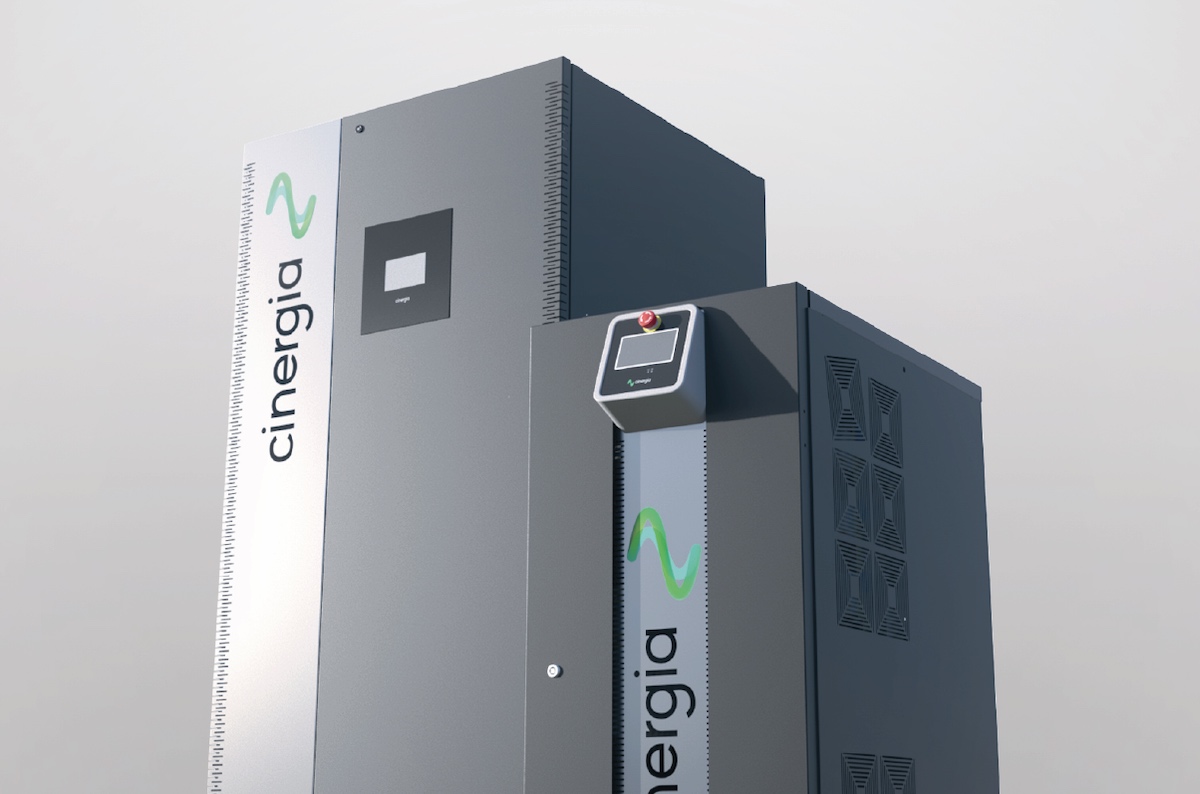
Discover our Regenerative and Bidirectional DC Converter: the B2C+
The B2C+, our Regenerative DC Converter for e-mobility solutions
news
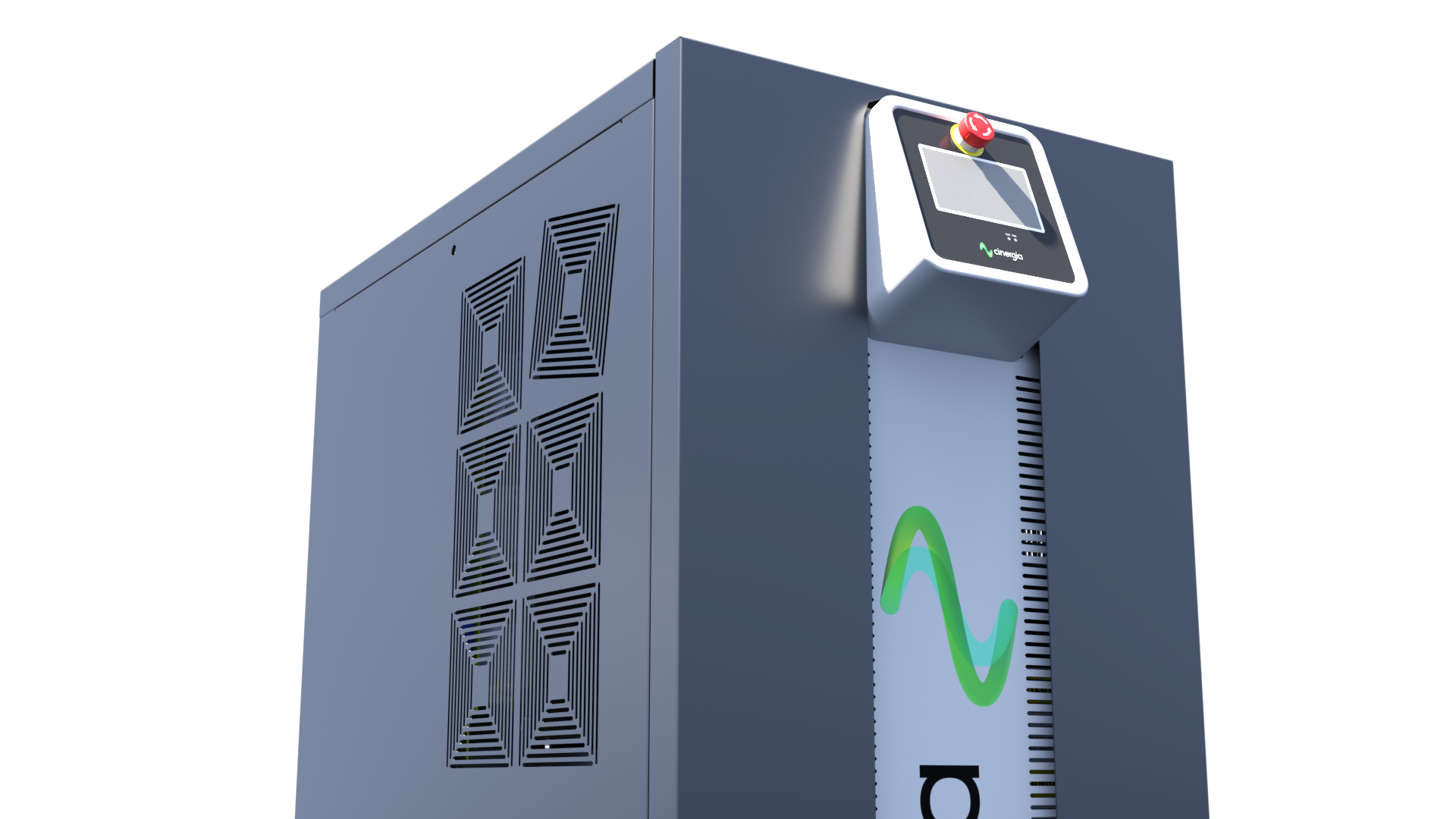
Do you need to emulate electrical loads?
Our EL+ vAC AC is a current source designed to emulate the electrical behavior of passive and active devices connected to the grid
news
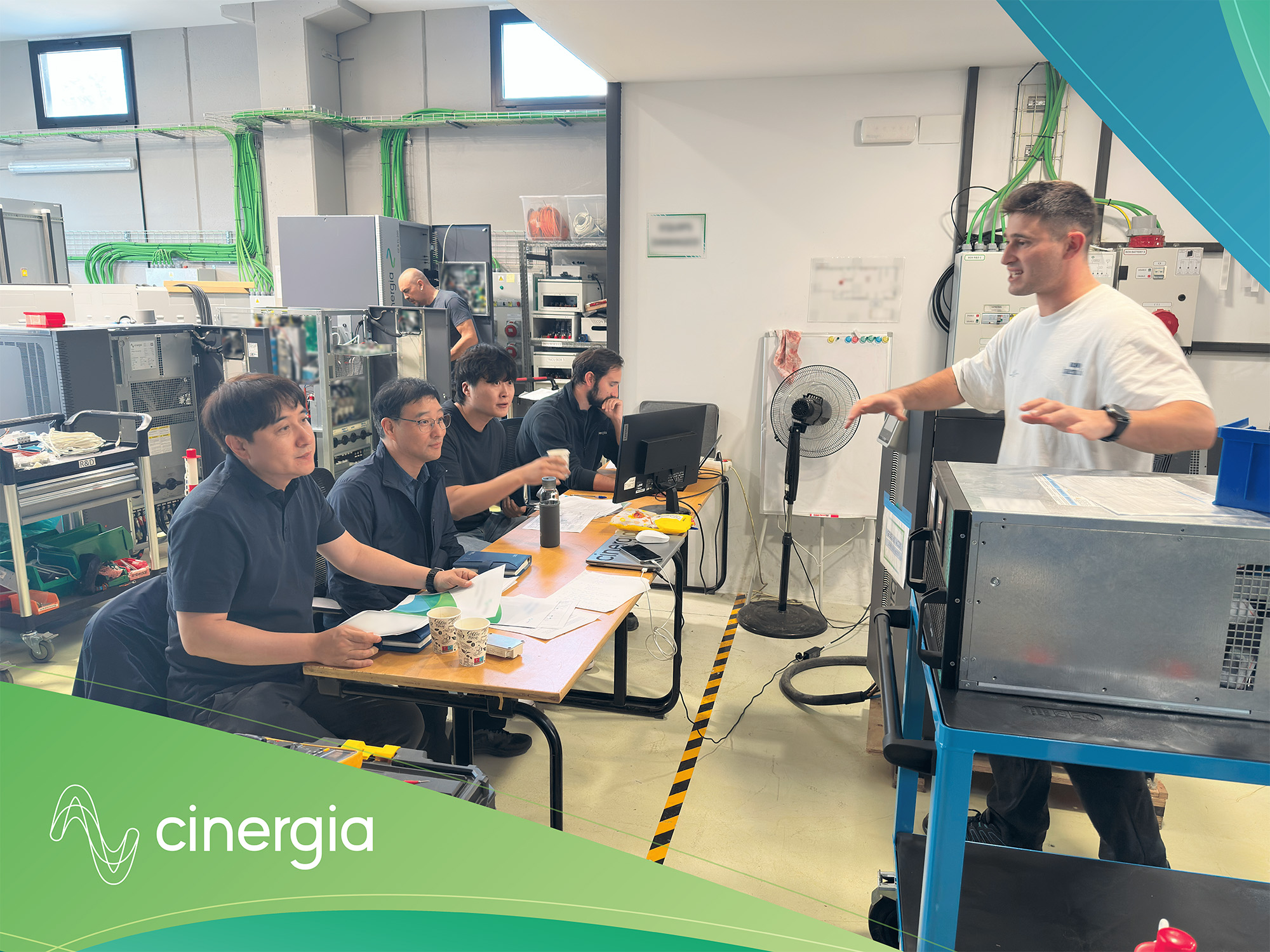
Strengthening Global Collaboration: SAT Training with Our Korean Partner
Our headquarters became a hub of international collaboration. We had the pleasure of welcoming our partner KMi System from South Korea for an intensive training led by our SAT experts.
news
CINERGIA: Pioneering Innovation in Electrification and Energy Transition
CINERGIA has been recognized as an Innovative SME by the Ministry of Science, Innovation, and Universities of the Government of Spain